
An Ode to Self-Care, Part II: Self-Love Through Connection
“One of the best guides to how to be self-loving is to give ourselves the love we are often dreaming about receiving from others... It is silly, isn’t it, that I would dream of someone else offering to me the acceptance and affirmation I was withholding from myself... Do not expect to receive the love from someone else you do not give yourself.”
Years ago, I wrote a blog post celebrating a different relationship than you might expect ahead of Valentine’s Day: the relationship with yourself.
That post focused on mindfulness and self-care in the name of self-love.
I’d like to take that further now, because February isn’t just home to the biggest commercial romantic holiday. It’s also:
International Friendship Month worldwide.
Time to Talk Day (February 5) in the UK, which invites widespread conversations about mental health.
National Make-a-Friend Day (February 11) in the US.
Palentine’s / Galentine’s Day (February 13), purely platonic alternatives to Valentine’s Day.
Lunar New Year (starting February 17), a key reconnection point for Asian communities.
Romantic partnerships get a lot of attention this time of year, but platonic relationships are equally vital for your mental health and wellbeing.
So let’s give them a turn in the spotlight.
Why do platonic relationships matter?
The foundation of a fulfilling life isn’t finding “The One” but having a solid architecture of connection.
This is where you come in. YOU are the secure base upon which all external connections are built.
This means secure self-love is the foundation for external security, not just a byproduct of it.
With internal security comes the power to choose safe supports who nurture your growth and lift you higher.
A romantic partner CAN be a safe support, but they CANNOT be your only one.
Thinking otherwise is self-limiting, especially when you consider the full range of non-romantic, non-sexual bonds we’re capable of:
friends
family
neighbors
coworkers and classmates
niche communities: book clubs, volunteer organizations, fitness groups
service providers: therapists, doctors, mentors, religious counsel
pets and service animals
Your capacity to build a safe support network is vast, and you deserve to maximize it.
Where does your capacity for connection come from?
To conceptualize how you connect with others, let’s look at attachment theory.
Research has shown that interactions with caregivers in infancy shape our bonding preferences. And those early childhood patterns follow us into adulthood.
This essentially wires your brain’s ‘automatic programming’ in relationships.
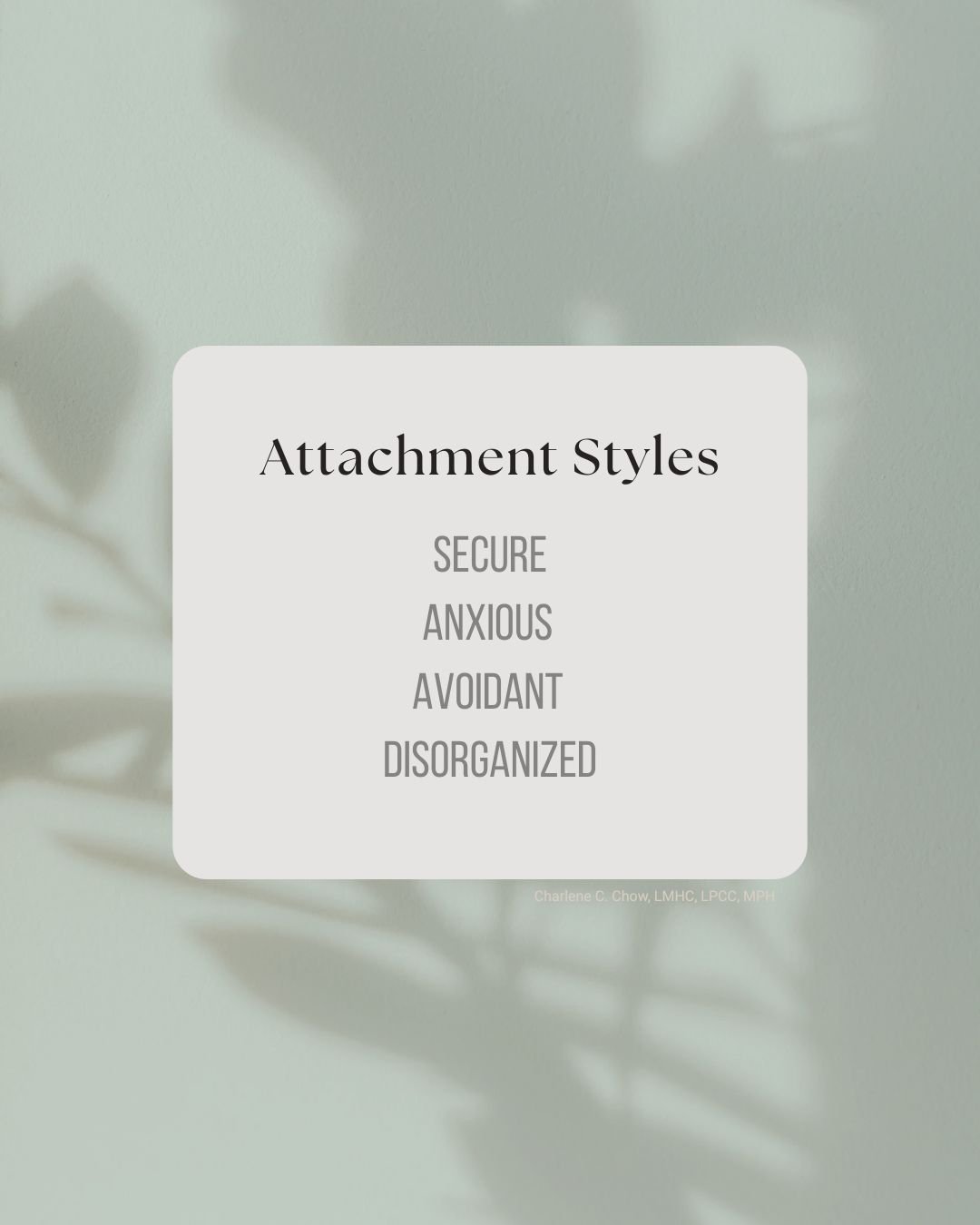
There are 4 attachment styles to know:
1. Secure
This is the ideal. Securely attached adults crave closeness AND feel confident navigating emotional intimacy. If you’re secure, you readily accept connection, and don't panic when alone or facing rejection.
2. Anxious
Anxiously attached adults carry a fear of rejection. They crave closeness but struggle with believing emotional intimacy will last. You might worry that others don’t value you as much as you value them. Or you may excessively seek reassurance and do things that get labeled as “clingy.”
3. Avoidant
Avoidantly attached adults carry a fear of losing autonomy. They crave closeness but struggle with emotional intimacy being a two-way street. You may find yourself feeling “suffocated” and worrying about losing yourself. You might feel the urge to pull away when relationships start to demand more emotional investment.
4. Disorganized
This is an intense mix of anxious and avoidant traits. Disorganized adults crave closeness but learned that others are inherently unsafe. Because this often arises from complex trauma, it requires deeper attention than this one post can provide, and will not be my focus here.
Why do attachment styles matter?
Contrary to what pop culture may have you believe, attachment styles don’t just apply to romantic partners.
It fluctuates depending on who you’re with.
And friendships are fair game.
This is because early bonding experiences shape who feels “safe” to us — not just who we think is physically safe to be around, but who is emotionally nurturing, trustworthy, and reliable… a source of comfort and security.
FOR EXAMPLE: if you grew up people-pleasing and believing you had to earn love, then in adulthood you might be drawn to friendships that feel "high drama," hot-and-cold, one-sided, or transactional.
Unfortunately, when friendships are not truly secure, a few things can happen:
You develop a skewed sense of what “safety” looks like.
You lose trust in your gut instincts and grow to doubt yourself.
You learn to become comfortable with people who are actually emotionally harmful to be around.
You tell yourself the anxious energy of an inconsistent friendship is a sign of “good chemistry” rather than a lack of safety.
The reality is that unbalanced friendships can trigger existing attachment insecurities and re-open old emotional wounds.
. . . . . . . .
. . . . . . . .
. . . . . . . .
The reality is that unbalanced friendships can trigger existing attachment insecurities and re-open old emotional wounds. . . . . . . . . . . . . . . . . . . . . . . . .
Thought questions:
How have your attachments impacted your capacity for self-love?
Do they add or subtract from your emotional stability and self-esteem?
What does self-love look like through your attachment lens?
When your nervous system gets used to the chaotic energy of inconsistent people, “secure” might feel like “boredom” at first; in reality, it’s just the unfamiliar feeling of emotional stability allowing your nervous system to rest, at last.
Self-love means giving yourself earned security — not independently from other attachments, but through them.
This means looking for friends who are steady, reliable, and emotionally available.
This means curating safe connections in as many relationships as possible, and sitting with the calm that follows true emotional security.
“Insecure people only eclipse your sun because they’re jealous of your daylight and tired of their dark, starless nights.”
One more angle to consider: your Inner Child.
In addition to attachment styles, it may be worthwhile to notice whether your Inner Child has something to say.
This is a different framework that posits your subconscious noticed when your early needs weren’t met, and remembered how painful that felt. Those hurts become Inner Child wounds.
These often show up as knee-jerk emotional reactions that feel impulsive and irrational. They can also bleed into adulthood if left unaddressed.
As an adult, you might struggle to name the feelings linked to these emotional reactions. That’s because your Inner Child lacked the language to understand and process emotional wounds in a verbal way.
As a result, those feelings may have simply gone unnamed, unaddressed, and unhealed.
What does self-love look like through your inner child lens?
Thought question:
Ask yourself: "Would I want my childhood self to be treated the way this friend is treating me right now?"
If the answer is "no," what does this say about your friendship?
Self-love can manifest for your Inner Child in a few ways:
Your rational, emotionally-aware adult Self steps up to name those long-ignored Inner Child feelings.
Your adult Self learns to listen to and protect your Inner Child needs.
Your adult Self chooses different courses of action that provide corrective experiences — new, positive experiences that rewrite old, painful ones — to actively heal your Inner Child wounds.
And guess what? Building connections with only safe supports is one of those corrective experiences.
KEY CONCEPT: A friend who invites you to be yourself and listens without judgment or criticism shows your Inner Child that it is finally safe for your authentic self to be seen.
What’s the bottom line?
Being open and vulnerable can feel like less of a risk if you start by nurturing your secure base first, prioritizing your own attachment needs and healing your Inner Child wounds.
Doing so proves to yourself that you have the power to stay safe emotionally, regardless of anyone else’s reactions.
Over time, these acts of courage and self-love sow the seeds from which healthy connections grow and thrive.
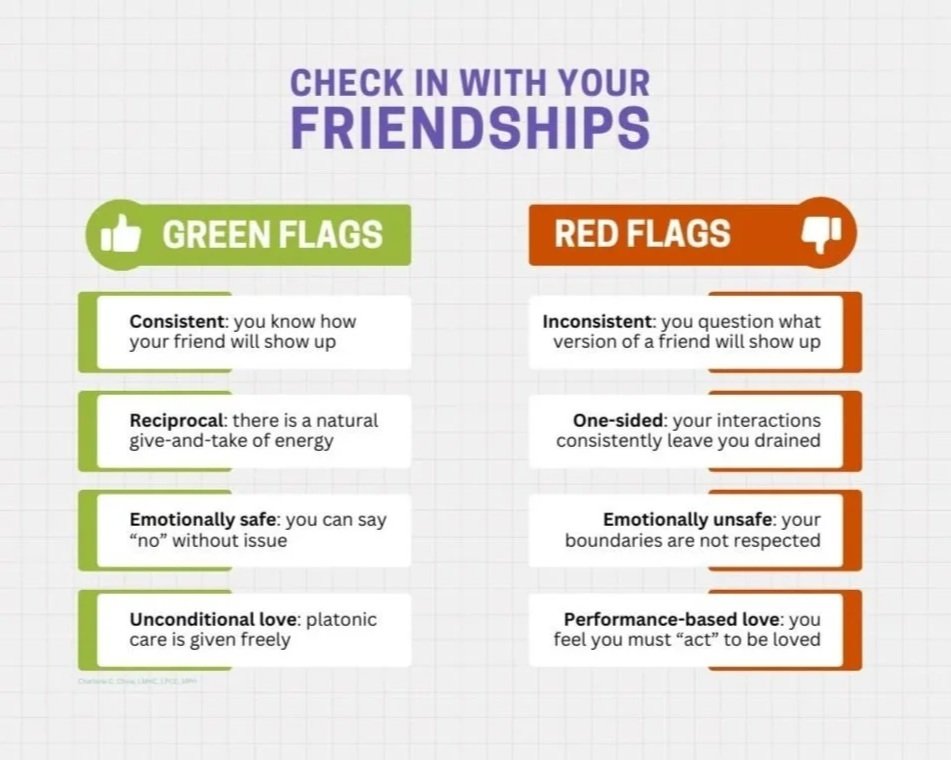
If you need a litmus test, take a moment to notice how you feel around your friends. It makes sense to audit your social network if you feel something is “off.”
As you move through February, remember that there’s more to self-love than individual self-care.
It’s about who is listening as much as it’s about being your authentic self.
Fulfilling friendships and safe platonic relationships are gifts you deserve to give yourself. Take some time to center those who make you feel safe, seen, heard, and valued.
Don’t wait for the next Time to Talk Day to help your Inner Child find the voice they suppressed years ago.
Be securely attached to yourself first and foremost.
Be the architect of your own connections.
Let the rest follow from there.
“Being different is a revolving door in your life where secure people enter and insecure exit.”
Are you struggling with attachment insecurities or Inner Child wounds?
Working through these deep-seated, long-standing patterns is tough — and you don’t have to do it alone.
As a therapist, I firmly believe your most meaningful status isn't just "single," "taken," or "it’s complicated."
The most important relationship is the one you have with yourself.
If you’d like personalized support tuning into your relational needs and healing old emotional wounds, consider scheduling a complimentary 10-minute phone consultation with me here.
It would be my honor to hold safe space and work with you to identify your needs so you can make choices that bring emotional clarity, security, and peace.
Disclaimer: This blog is intended for informational purposes only, and does not constitute medical or psychiatric advice. Please consult with a qualified healthcare professional directly for personalized guidance and support.